
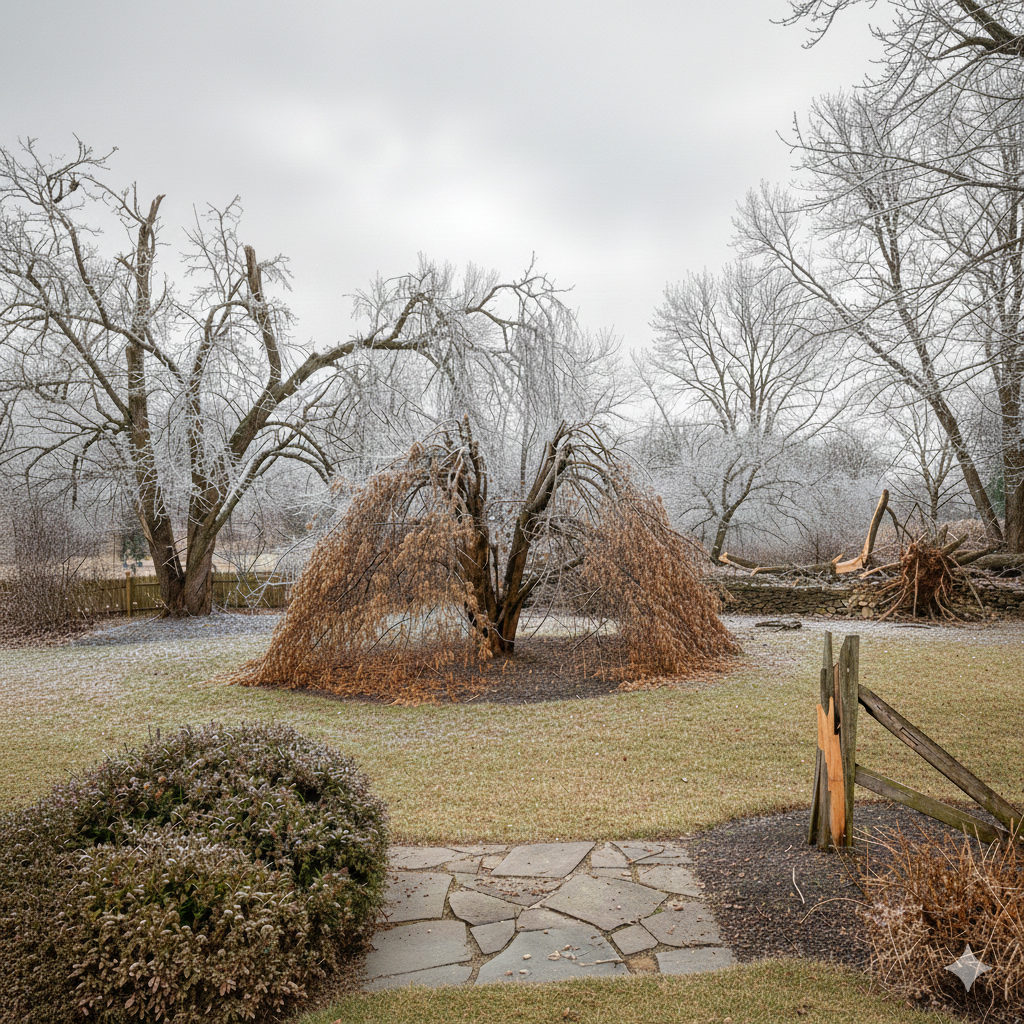
Winter in New Jersey, we endure it, we complain about it, and every March we swear we’re moving to Florida. But while you were busy surviving the cold, your landscape was out there taking punches. Freezing temps, ice storms, heavy snow, and enough road salt to season a lifetime supply of pretzels all add up to one thing: your yard needs some serious TLC before spring arrives.
The good news is that most winter landscape damage is absolutely fixable. The better news is that you don’t have to fix it yourself. At Prendergast Landscape Contractors, we’ve been nursing New Jersey landscapes back to health after tough winters for years, and we’ve seen it all. Here’s a rundown of the most common damage we find every spring, and what we do about it.
Salt Damage: Your Lawn’s Least Favorite Seasoning
We love salt in the winter. It keeps our driveways and walkways safe, and without it, half of New Jersey would be walking around in a full hockey stance from November through March. The problem is that all that salt has to go somewhere, and where it usually ends up is your soil.
Salt spray from passing cars and runoff from treated surfaces can accumulate along lawn edges and garden beds, leaving you with brown, crispy turf and stressed-out shrubs that look like they’ve given up on life entirely.
The fix isn’t as simple as hoping a good rainstorm washes it away. Our team can assess the damage, flush and amend affected soil, and reseed or replace whatever didn’t make it through. Think of it as a detox program for your lawn.
Frost Heave: When Your Plants Decide to Make a Break for It
Frost heave is what happens when water in the soil freezes, expands, and then thaws, sometimes over and over again throughout the winter. The ground essentially acts like a slow-motion jack, pushing plants, shrubs, and young trees partially out of the soil and leaving their roots exposed to the cold and wind.
If you walk your property this spring and notice a shrub that looks like it’s attempting a dramatic exit from your garden bed, tilted, lifted, or half out of the ground, that’s frost heave at work. Left alone, those exposed roots will dry out, and the plant won’t survive the season.
The good news is that if we catch it early enough, many of these plants can be carefully reset and saved. We’ll get out there, assess the situation, and either nurse your plants back into place or recommend replacements that are better suited to handle New Jersey winters without staging a soil breakout.
Winter Burn on Evergreens: The Crispy Arborvitae Problem
You planted a beautiful row of arborvitae for privacy. They looked great all fall. Now they’re brown on one side and look like they got too close to a heat lamp. Welcome to winter burn.
This happens when cold, dry winter winds pull moisture from the leaves and needles of evergreens faster than the frozen root system can replace it. Arborvitae, boxwoods, and hollies are especially prone to this, and the damage is almost always most visible on the windward side of the plant.
Here’s the thing, winter burn often looks worse than it is. A lot of these plants can bounce back with some careful pruning and a little patience as the growing season kicks in. Our team will evaluate what’s truly dead and what just looks dead (there is a difference), remove the damaged material, and give your evergreens the best shot at a full recovery. We’ll also talk to you about applying an anti-desiccant spray this coming fall so we’re not having this same conversation next February.
Storm-Damaged Trees: More Than Just an Eyesore
There’s nothing quite like stepping outside after a winter ice storm to find a large branch decorating your front lawn, or worse, your roof. Heavy snow and ice are brutally unforgiving to trees, snapping branches, splitting trunks, and occasionally taking entire trees down without much warning.
Even damage that looks minor deserves a closer look. Hanging or partially broken limbs are a genuine safety hazard, and open wounds on trees are basically an open invitation for disease and pests to move in and make themselves comfortable. Neither of those things ends well.
We recommend a thorough tree inspection every spring, particularly after a rough winter like we are having this year. We’ll identify anything hazardous, perform corrective pruning to restore structure and shape, and give you an honest assessment of any trees that may be beyond saving. It’s much better to deal with a compromised tree proactively than to deal with it after it’s introduced itself to your car.
Compacted Soil and Sad, Struggling Turf
Your lawn spent the last several months buried under snow, frozen solid, and walked on by everyone who didn’t feel like going around it. The result? Compacted, suffocated soil that’s about as welcoming to grass roots as a parking lot.
Compacted soil blocks water, air, and nutrients from reaching the root zone, which means even if your grass survived the winter, it’s going to struggle to thrive in the spring. Throw in some bare patches, matted turf, and maybe a little snow mold for good measure, and you’ve got a lawn that needs more than just some sunshine and wishful thinking.
Spring aeration is the answer. By pulling small plugs of soil from the ground, we open things back up and let your lawn breathe again. Pair that with some overseeding and a targeted fertilizer application, and most winter-damaged lawns can fully recover well before summer arrives. It’s genuinely one of the best investments you can make in your property.
The Bottom Line: Don’t Wait Until It Looks Like a Disaster
We get it, when it’s still cold outside and the snow is barely melted, the last thing you want to do is think about your landscape. But here’s the honest truth: the earlier we can get out there and assess the damage, the better the outcome for your plants, trees, and lawn. Waiting until May to deal with something we could have addressed in March is like waiting until the check engine light has been on for six months before bringing your car in. Possible to fix, but messier than it needed to be.
At Prendergast Landscape Contractors, we offer comprehensive spring cleanup and landscape assessment services for residential and commercial properties throughout Manalapan and the surrounding area. We’ve seen every kind of winter damage New Jersey can dish out, and we know exactly how to handle it.
Give us a call today and let’s get your property back in shape. We’re already booking up for spring, so the sooner you reach out, the better. Your lawn has been through enough; it deserves a little help.
Prendergast Landscape Contractors serves residential and commercial clients in the Manalapan, NJ area and throughout the entire state of New Jersey. Contact us today for a free estimate.


0 Comments